

Offshore Weld Joint Protection: Advanced Solutions for Long-Term Pipeline Integrity
Offshore pipelines are the foundation of energy transportation in the world, as they transport oil, gas, and other important resources over extensive networks using underwater pipelines. Although the current pipeline systems are designed to be durable, welded joints are one of the most susceptible areas of any offshore pipeline. These connection points are in continuous exposure to seawater, pressure changes, mechanical strain, and corrosive components, which make proper Offshore Weld Joint Protection a key to the long-term integrity of pipelines.
With offshore developments shifting to more complex and deep-sea operations and more challenging environments, operators are currently exploring novel and enhanced coating technologies and integrity management systems that can protect weld joints at various stages of the asset life cycle. This protection not only increases the operational life but also lowers the maintenance costs, environmental risks, and enhances the reliability of the entire system.
Why Weld Joints Require Specialized Protection
The welds in a pipeline are formed when the various sections of the pipes are welded together during installation. Although factory-applied coatings frequently accompany the main pipe body, welded sections will need to be coated on-site.
Weld joints may be prone to:
- Localized corrosion
- Coating disbondment
- Mechanical damage
- Water ingress
- Structural degradation
- Premature asset failure
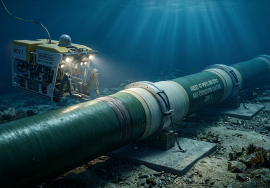
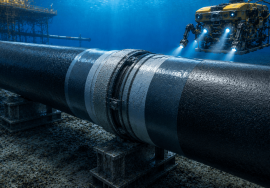
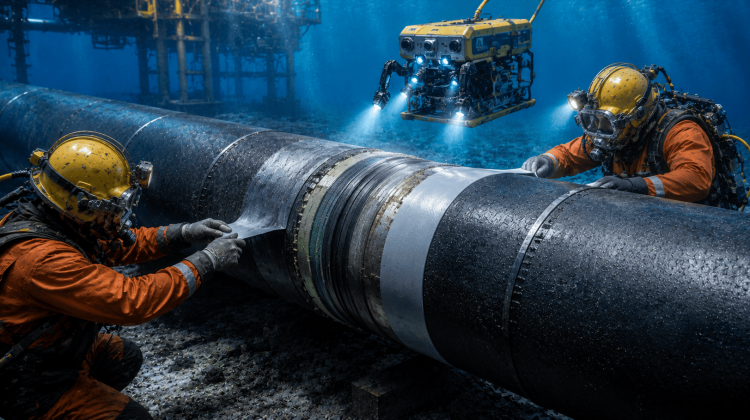
Due to their frequent exposure during installation, these areas will need special Pipeline weld joint coating solutions that can re-establish a continuous protective coating over the entire pipeline system.
The Role of Field Joint Coating Systems in Offshore Projects
Advanced Field joint coating systems are one of the best ways of offering protection to welded parts. These systems are developed to suit the performance traits of factory applied finishes as well as long term protection against marine environments.
Common field joint coating technologies are:
Heat Shrink Sleeve Systems
Heat shrink sleeves give a shrink protection that closely fits the spot of welding. They are also commonly applied in offshore applications as they are easy to install and highly resistant to corrosion.
Liquid Epoxy Coatings
Epoxy-based systems form an uninterrupted protective layer that attaches itself to the steel surface. These finishes provide good adhesiveness and durability over time in hostile undersea conditions.
Polyurethane Protective Systems
Polyurethane finishes provide high abrasion and elasticity and thus can be used in offshore pipe with mechanical stress and seabed movement.
A mixture of these technologies has usually been used by Modern Subsea Field Joint Coating Services to get optimal performance and reliability.
Offshore Underwater Pipeline Coating and Joint Protection
Complete pipeline protection will involve not only the coating of the weld area. ADVanced Offshore Underwater Pipeline Coating solution is used in conjunction with the field joint system to develop an all-inclusive corrosion prevention plan.
These coating systems offer:
- Enhanced corrosion resistance
- Seawater resistance.
- Improved mechanical durability
- Impact and abrasion resistance.
- Long service life of assets.
Operators can also save a lot of maintenance needs in the long run by making sure that the factory-applied coatings match the field-applied protection.
Advanced Offshore Anti-Corrosion Coating Technologies
One of the largest threats to offshore infrastructure is corrosion. Contemporary Offshore Anti-Corrosion Coating technologies are uniquely designed to endure the tough marine environment, and their protective abilities span decades.
Popular solutions include:
Fusion Bonded Epoxy (FBE)
FBE coatings have a high degree of adhesion and corrosion resistance and are widely used in the offshore industry.
Three-Layer Polyethylene (3LPE)
Epoxy, adhesive, and polyethylene layers are combined into 3LPE systems, which provide great mechanical protection and durability.
Three-Layer Polypropylene (3LPP)
Frequently used in high-temperature applications, 3LPP coating can offer better thermal and corrosion resistance.
These technologies are important in the realization of effective Offshore pipeline corrosion protection programs all over the world.
The Importance of Subsea Weld Joint Protection in Deepwater Projects
With the growing offshore developments into deeper waters, environmental conditions are becoming more difficult. Repairs are more costly and complicated by higher hydrostatic pressure, increased currents, and inaccessibility.
Good Subsea weld joint protection assists operators:
- Prevent early-stage corrosion
- Improve structural reliability
- Reduce intervention costs
- Minimize production downtime
- Enhance operational safety
High-performance joint protection solutions can also be much more cost-effective to invest in during the installation process than undertaking later subsea repairs during the lifecycle of the asset.
Emerging Trends in Pipeline Integrity Management
The offshore industry is quickly embracing computer technologies to enhance monitoring and maintenance planning of assets.
Smart Inspection Systems
Pipelines and coating systems are more accurately inspected using remote-operated vehicles (ROVs) that have advanced sensors to scan the area of inspection in an accurate manner.
Predictive Maintenance Analytics
Machine learning and artificial intelligence tools use inspection data to forecast the deterioration of the coating, to determine the potential risks, and to identify them before the failure.
Digital Integrity Platforms
The digital platforms being adopted in modern Pipeline integrity management programs are based on a combination of inspection records, corrosion monitoring data, and maintenance schedules, into a single management framework.
These innovations are assisting offshore operators to maximize asset life and minimize lifecycle costs.
Choosing Experienced Marine Pipeline Coating Specialists
It is important to choose qualified Marine Pipeline Coating Specialists in order to ensure protection in the long term and compliance with regulations. Experienced contractors have knowledge of the complexities of offshore environments and can advise on the coating systems to be used based on the specifics of the project.
Key considerations include:
- Environmental conditions
- Pipeline operating temperature
- Water depth
- Installation method
- Asset design life
- Maintenance strategy
A tailored protection strategy is one that guarantees maximum performance during the infrastructure lifecycle.
Frequently Asked Questions
Q1. What is offshore weld joint protection?
Ans: It is defined as a special coating and protective system used on the welded parts of the offshore pipelines to inhibit corrosion, mechanical damage, and environmental degradation.
Q2. Why are the weld joints in pipelines more susceptible to corrosion?
Ans: Installation exposes the welded areas, which in most cases do not have the coating applied by the factory to the main pipe body, thus making them more vulnerable to corrosion unless properly treated.
Q3. What are field joint coating systems?
Ans: Field joint coating systems are protective systems that are used to cover the weld zones following the installation of the pipeline in order to reestablish continuous corrosion protection.
Q4. What are the benefits of offshore pipeline corrosion protection in extending asset life?
Ans: Protective coatings can inhibit corrosion and prolong their service lives by not allowing moisture and corrosive elements to come into contact with the steel surface.
Q5. Why is pipeline integrity management important?
Ans: Pipeline integrity management assists the operators to keep track of the status of the assets, risk identification, maintenance scheduling, and avoid failures before they affect the operations.
Conclusion
Welded joints are the most susceptible elements of offshore pipeline systems whose protection is vital to the overall success of the system in the long run. Operators can greatly mitigate the risks of corrosion and enhance the reliability of infrastructure by using advanced coating technologies, robust field joint protective strategies, and proactive integrity management strategies.
With the increasing challenges in offshore environments, high-quality Offshore Weld Joint Protection solutions are still among the most efficient methods to protect the most critical assets and maintain the high efficiency of operations and the long-term viability of pipeline performance.