


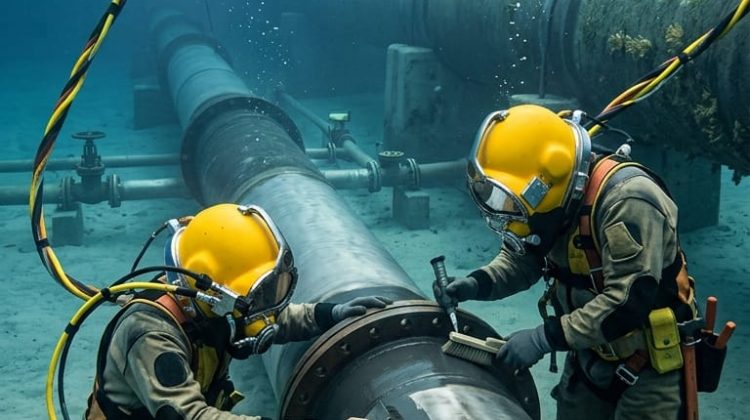
Offshore Pipeline Preservation: Advanced Strategies to Prevent Corrosion and Extend Pipeline Lifespan
Offshore pipelines are very essential to the energy infrastructure in the world, as they help in the transportation of oil, gas, and other resources under adverse sea conditions. These resources are constantly subjected to saltwater, hydrostatic pressure, temperature variations, mechanical forces, and corrosive chemicals, which may cause them to wear down as time goes on. It is critical to implement a powerful Offshore Pipeline Preservation plan in order to protect the infrastructure, reduce operational risks, and maximize the long-term functioning of the assets.
Pipeline maintenance is not routine maintenance. It is a combination of corrosion prevention, protective coating, structural inspections, integrity management, and predictive maintenance to maintain offshore pipelines safe and reliable during their entire lifecycle of operation. Through early-life preservation, operators are able to save a lot of lifecycle costs and enhance safety and environmental performance.
Why Offshore Pipeline Preservation Matters
One of the most costly tasks in the energy sector is replacing offshore pipelines. An active preservation plan will aid in avoiding early degradation and reduce the expenses of expensive repair or replacement.
The major hazards of offshore pipelines comprise:
- External corrosion
- Internal corrosion
- Coating deterioration
- Mechanical damage
- Seabed movement
- Operational loading-induced fatigue.
- Marine biofouling
It is better to mitigate these risks at the initial stages to enhance reliability and continuous production.
Offshore Pipeline Corrosion Protection: The First Line of Defense
The most common cause of the degradation of offshore pipelines is corrosion. The initial step in effective Offshore Pipeline Corrosion Protection lies in the correct choice of protective systems in the design, installation, and operation.
The important protection techniques are:
High-Performance Protective Coatings
Coating materials provide a hardened layer that shields steel against seawater, oxygen, and corrosive gases.
Commonly used offshore coating technologies are:
- Fusion Bonded Epoxy (FBE)
- Three-Layer Polyethylene (3LPE)
- Three-Layer Polypropylene (3LPP)
- Polyurethane coatings
- Abrasion-resistant overcoats
These systems significantly reduce corrosion rates while improving long-term durability.
Cathodic Protection
Electrochemical protection that is complementary to the external coating systems to prevent localized corrosion is offered by sacrificial anodes and impressed current systems.
Cathodic protection and coatings together provide holistic long term protection to offshore pipelines.
Pipeline Preservation Techniques That Improve Asset Longevity
The contemporary Pipeline Preservation Techniques are aimed at averting deterioration before it has an impact on the functioning performance.
Best practices include:
Routine Inspection Programs
Periodic inspections detect any damage to the coating, corrosion, structural defects, and environmental variations that can affect the integrity of the pipeline.
Widely used inspection techniques are:
- Remotely Operated Vehicle (ROV) surveys.
- Intelligent pigging
- Ultrasonic testing
- Visual inspections
- Non-destructive testing (NDT)
Preventive Maintenance
Planned maintenance enables the operators to fix broken coating, change sacrificial anodes, and fix minor flaws before they can result to serious problems.
Environmental Monitoring
Surveillance of seabed condition, water chemistry, and biological activity assists in detecting the changing environmental conditions that may increase the rate of corrosion.
These preventive strategies enhance the reliability of operations and save on the unplanned cost of maintenance.
The Role of Marine Protective Coating Systems
The design of Modern Marine Protective Coating Systems has been developed to endure some of the most difficult operating environments in the offshore environment.
A good coating system generally comprises:
- Surface preparation
- Primer coating
- Intermediate barrier coating
- Durable topcoat
All layers fulfill a particular task, which work in collaboration to prevent corrosion, abrasion, UV, and chemical assault.
The choice of the coating system is determined by the operating temperature of the pipeline, the installation depth, the environment, and the desired service life.
Subsea Pipeline Integrity Management for Long-Term Performance
Subsea Pipeline Integrity Management is an effective approach to integrate the engineering knowledge, digital systems, inspections, and maintenance planning into a unified approach to protecting the assets.
Core elements include:
- Risk assessments
- Corrosion monitoring
- Structural evaluations
- Fitness-for-service analysis
- Maintenance planning
- Regulatory compliance
Instead of responding to failures, integrity management allows operators to foresee possible problems and take remedial measures before production can be impacted.
Offshore Asset Life Extension Through Modern Technologies
Due to the ageing of offshore infrastructure, Offshore Asset Life Extension programs are gaining importance.
The newest technologies that assist in extending the life of pipelines are:
Smart Corrosion Monitoring
Continuous data on the rate of corrosion, coating performance, and the environment are provided by the embedded sensors.
Digital Twin Technology
Virtual models are used to simulate the performance of the assets and assist the engineers to assess the maintenance situation prior to being implemented in the field.
Artificial Intelligence
Predictive AI-based maintenance systems use the data collected during inspections to forecast the trends of degradation and prioritize maintenance based on the trends.
Robotic Inspection Systems
State-of-the-art ROVs and autonomous underwater vehicles enhance efficiency in terms of inspection and minimize operational risks.
These innovations enable operators to achieve the maximum value of existing infrastructure and the minimum lifecycle costs.
Best Practices for Effective Offshore Pipeline Preservation
In order to ensure long-term reliability of the pipeline, offshore operators are advised to:
- Use high-performance protective coatings.
- Have good cathodic protection systems.
- Perform routine inspections
- Monitor corrosion continuously
- Use risk-based maintenance programs.
- Apply predictive analytics and online monitoring.
An active preservation plan enhances safety, optimizes operations, and supports the sustainability of offshore operations.
Frequently Asked Questions (FAQs)
Q1. What is offshore pipeline preservation?
Ans: It entails the safeguarding of offshore pipelines by corrosion prevention, inspection, maintenance, coating, and integrity management to achieve maximum service life.
Q2. Why is corrosion protection of offshore pipelines important?
Ans: Corrosion protection helps in avoiding the corrosion of metal that occurs because of seawater, chemicals, and other tough environments of the sea and helps to reduce costs of maintenance and enhance reliability.
Q3. What are the usual methods of preserving pipelines?
Ans: The most common methods are protective coating, cathodic protection, periodic inspection, corrosion monitoring, smart pigging, and preventive maintenance.
Q4. Subsea pipeline integrity management is what?
Ans: It is an organized method of checking, evaluating, and maintaining pipelines underwater to guarantee long-term safety, dependability, and regulatory approval.
Q5. What are the benefits of offshore asset life extension to the operators?
Ans: Life extension programs cut down on capital expenditure, improve infrastructure utilization, enhance safety, and maximize offshore investment.
Conclusion
The future of pipeline performance relies on a proactive preservation approach that is based on progressive corrosion protection, regular inspections, integrity management, and innovative monitoring technologies. Using the extensive Offshore Pipeline Preservation programs, operators have the opportunity to minimize the operational risks, increase the life of the infrastructure, and enhance the overall reliability of the asset.
With offshore projects growing in complexity and offshore investment costs ever increasing, the need to maintain existing infrastructure using innovative engineering solutions is not just a cost efficient move but also an essential aspect of sustainable offshore operations.
