


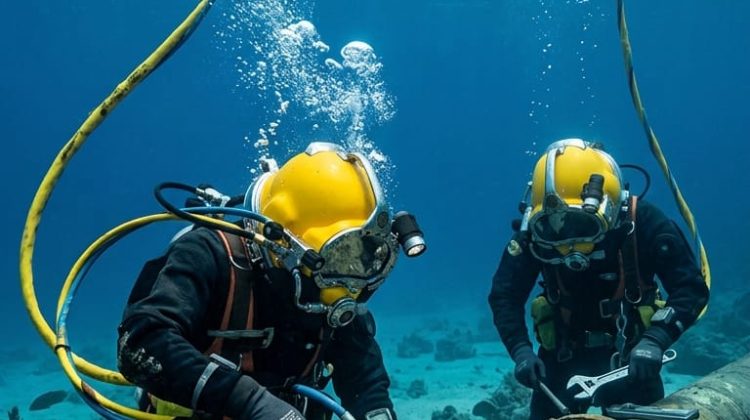
Offshore Pipeline Maintenance: Best Practices for Long-Term Asset Integrity and Reliability
Offshore pipelines are the backbone of the global energy industry, transporting oil, gas, and other critical resources across challenging marine environments. These resources work in an unrelenting marine environment filled with seawater exposure, pressure, variable temperatures, oceanic currents, and corrosive nature. Pipeline degradation may result in expensive repair, environmental threats, and downtime of operations without a proactive maintenance approach. This is the reason why Offshore Pipeline Maintenance is necessary in assuring long-term asset integrity, safety, and reliability.
The contemporary maintenance programs are not confined to regular checkups. They combine advanced monitoring technologies, predictive analytics, corrosion prevention systems, and integrity management practices to maximize pipeline performance and extend service life. Offshore operators can reduce lifecycle costs with proactive strategy and at the same time meet industry and environmental requirements.
Why Offshore Pipeline Maintenance Is Critical
The offshore pipelines are built to last long, but they are always subjected to the extreme environment, which hastens wear and damage.
Typical threats to pipeline performance are:
- External and internal corrosion.
- Breakage of anchors or fishing gear.
- Movement and erosion of the seabed.
- Fatigue due to periodic loading.
- Coating degradation
- Marine biofouling
Unless they are dealt with in time, they will have the potential to undermine structural integrity, disrupt production, and raise maintenance costs. A well-planned maintenance plan reduces such risks and enhances performance.
Offshore Pipeline Inspection: The Foundation of Preventive Maintenance
One of the most efficient methods of early identification of damages before they turn into critical failures is regular offshore pipeline inspection.
The modern inspection methods can be equated to:
Remotely Operated Vehicle (ROV) Surveys
High-definition cameras, sonar systems, and high-tech sensors on ROVs carry out thorough underwater inspections without disruption to operations.
Intelligent Pigging
The smart pigs are inspection tools that are sent to pipelines to gather information about wall thickness, corrosion, dents, and cracks.
Non-Destructive Testing (NDT)
Ultrasonic testing, magnetic particle inspection, and eddy current testing are some of the techniques that enable engineers to check the condition of the pipelines without destroying the asset.
Regular inspections are useful in the process of maintenance planning and assist the operators to prioritize on the repairing tasks according to the actual state of the assets.
Pipeline Integrity Management for Long-Term Performance
A Pipeline Integrity Management program is an effective program that integrates inspection data, engineering analysis, and risk assessment to enable pipelines to be safe throughout their operational lifecycle.
An overall integrity management plan incorporates:
- Corrosion monitoring
- Risk-based inspections
- Fitness-for-service assessments
- Defect evaluation
- Maintenance planning
- Regulatory compliance verification
Instead of responding to failures, integrity management can be used to detect vulnerabilities early and apply specific maintenance remedies to enhance long-term reliability.
Best Practices for Subsea Pipeline Maintenance
Subsea Pipeline Maintenance: This means that a mixture of preventive, predictive, and corrective tasks will be necessary to maintain infrastructure over its service life.
Scheduled Maintenance Programs
Regular check-ups will detect any damage on the coating, corrosion, and structural problems before they become big repairs.
Protective Coating Restoration
Mending of ruined protective coatings helps in avoiding seawater contact with the steel surface and helps in significantly lowering the rates of corrosion.
Cathodic Protection Maintenance
To maintain continuous corrosion protection, sacrificial anodes and impressed current systems should be checked periodically.
Marine Growth Removal
Removal of marine organisms on pipeline surfaces enhances the accuracy of inspection and aids in maintaining coating performance.
These best practices will help the operators to make their pipelines more accessible and reduce the number of unplanned shutdowns.
Offshore Corrosion Protection: A Key Element of Maintenance
One of the most common causes of failure of offshore pipelines is corrosion. Effective Offshore Corrosion Protection is a combination of several technologies that protect assets in hostile marine conditions.
The typical prevention strategies for corrosion are:
- Fusion Bonded Epoxy (FBE) coats.
- Three-layer polyethylene (3LPE) systems.
- Polyurethane protective coatings
- Cathodic protection systems
- Corrosion monitoring sensors
The use of protective coating with routine inspection can offer extended protection against structural corrosion and extend the life of pipelines.
Improving Marine Asset Reliability Through Digital Technologies
The offshore industry is changing its practices in the field of maintenance due to the advancements in digital engineering. The next step to enhance Marine Asset Reliability is by combining real-time monitoring with predictive maintenance tools.
Smart Sensors
The sensors today are unstoppable in their monitoring of pressure, temperature, vibration, and corrosion to give an early warning of any problems.
Predictive Analytics
Artificial intelligence processes inspection data and operational data to make predictions of degradation patterns and maintenance schedules.
Digital Twin Technology
The simulation of operating conditions, risk analysis, and maintenance planning is more effective because digital offshore asset replicas enable engineers to simulate the working conditions.
These technologies save on operations and enhance safety and decision-making.
Emerging Trends in Offshore Pipeline Maintenance
The offshore industry strives to implement innovative solutions that will improve maintenance efficiency and the longevity of the assets.
Key trends include:
- Uncrewed aerial vehicles.
- AI-powered defect detection
- Drone-assisted offshore inspections
- Environmentally friendly coating systems
- Integrity management systems on the cloud.
These innovations enable operators to enhance reliability, minimize intervention costs, and reduce environmental impact.
Frequently Asked Questions (FAQs)
Q1. What is offshore pipeline maintenance?
Ans: The process of inspection, monitoring, repair, and maintenance of offshore pipelines to provide safe, reliable, and efficient operation during their service life is known as offshore pipeline inspection, monitoring, repair, and maintenance.
Q2. Why is offshore pipeline inspection important?
Ans: Regular inspections are useful in detecting corrosion, coating damage, and structural defects before it progresses to expensive failures.
Q3. What is pipeline integrity management?
Ans: Pipeline integrity management is an organized methodology that integrates inspections, risk assessment, maintenance planning, and monitoring to ensure the safety and reliability of the pipeline.
Q4. What is the effect of offshore corrosion protection on the life of assets?
Ans: Cathodic protection systems, protective coating, and corrosion monitoring minimize the degradation of materials and prolong the life of offshore pipelines.
Q5. Which technologies are applied in pipeline maintenance at sea?
Ans: Modern maintenance is based on ROV inspection, intelligent pigging, non-destructive testing, digital monitoring systems, predictive analytics, and developed coating technologies.
Conclusion
An offshore pipeline maintenance strategy should not be based on periodic inspections but rather on a proactive approach elaborated on the basis of sophisticated technology, efficient prevention of corrosion, and continuous maintenance of integrity. Operators can improve asset reliability and reduce downtime, decrease lifecycle costs, and guarantee long-term success in operations by implementing offshore pipeline maintenance programs.
Preventive maintenance, digital inspection technologies, and advanced corrosion protection systems will not only protect valuable offshore infrastructure but will also help make energy operations safer and more efficient, and environmentally friendly in the future.
