


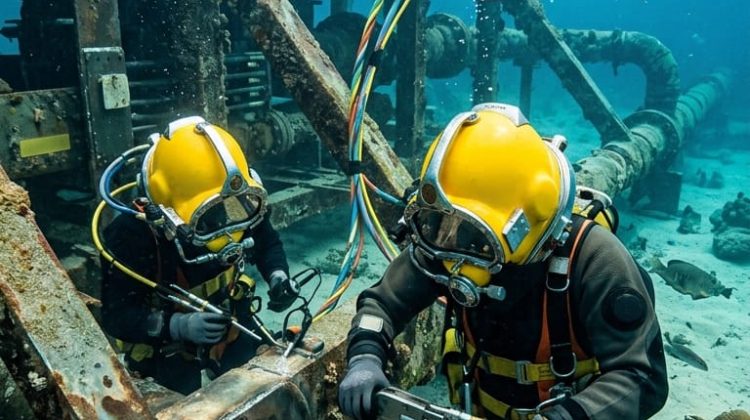
Subsea Engineering Solutions: Best Practices for Offshore Asset Integrity and Performance
The offshore energy sector relies on multifaceted underwater infrastructure to safely and effectively transport oil, gas, and other valuable resources. Long-term performance in pipelines, manifolds, risers, subsea production systems, and offshore platforms are exposed to challenging conditions in which endless exposure to seawater, high pressure, strong currents, and corrosive components may influence their functioning. To achieve operational efficiency, ensure the safety of important infrastructure, and increase the life of offshore resources, it is important to implement the most advanced Subsea Engineering Solutions.
Contemporary underwater engineering integrates new technologies, the use of special inspection techniques, the use of corrosion protection systems, the use of digital monitoring, and proactive maintenance programs. A proactive engineering approach enables offshore operators to enhance the reliability of their assets, minimize downtime, lower maintenance expenses, and comply with industry regulations.
Why Subsea Engineering Is Critical for Offshore Operations
Subsea facilities are some of the most valuable and difficult parts of offshore properties. Inspections and repairs necessitate very specialized machinery and qualified engineering teams since they are working under the water surface.
The typical problems that can impact underwater infrastructure are:
- Exfoliation corrosion due to the constant exposure to seawater.
- High hydrostatic pressure
- Mechanical stress and fatigue.
- Marine growth accumulation
- Seabed movement and erosion.
- Coating degradation
- Environmental loading
Early solutions to these issues allow avoiding expensive failures and enhancing the safety of operations and long-term work.
Offshore Asset Integrity Management: Protecting Critical Infrastructure
An effective Offshore Asset Integrity Management program will keep offshore equipment operating safely and efficiently during its operational lifecycle.
The main components of an integrity management strategy are:
- Risk assessments
- Corrosion monitoring
- Engineering evaluations
- Structural inspections
- Maintenance planning
- Regulatory compliance
- Lifecycle performance analysis
Instead of trying to correct corrections once they have gone wrong, integrity management aims at defining risks early and applying specific controls aimed at preventing them.
Subsea Inspection and Maintenance Best Practices
Regular Subsea Inspection and Maintenance works are essential to the maintenance of offshore infrastructure and uninterrupted production.
Remotely Operated Vehicle (ROV) Inspections
High-definition cameras, sonar systems, laser scanners, and robotic manipulators that are incorporated in ROVs enable engineers to inspect assets underwater with incredible precision.
Non-Destructive Testing (NDT)
Testing methods such as ultrasonic testing, magnetic particle testing, and eddy current testing test the structural integrity without damaging important equipment.
Preventive Maintenance
Routine maintenance of pipelines, valves, manifolds, and protective coating systems reduces wear and tear and increases lifetime.
Corrosion Monitoring
Continuous monitoring systems enable real-time information that will help engineers detect corrosion at a very early stage before it suffers too much damage.
The integration of these practices helps in proactive maintenance and minimizes unforeseen operations interruptions.
Underwater Engineering Services Supporting Offshore Projects
Professional Underwater Engineering Services: The scope of professional underwater engineering services is very broad and encompasses several technical operations that are necessary during the life cycle of the offshore infrastructure.
Such services usually involve:
- Pipeline installation support
- Structural inspections
- Underwater welding and repair work.
- Protective coating application
- Cathodic protection installation
- Subsea equipment installation
- Decommissioning support
These complicated tasks are done safely and efficiently by experienced engineering crews, commercial divers, and remotely operated vehicles.
Marine Infrastructure Protection Through Advanced Technologies
The protection of offshore structures needs extensive Marine Infrastructure Protection plans that integrate engineering understanding with sophisticated protection mechanisms.
The most important protection techniques are:
High-Performance Protective Coatings
Multi-layer protective systems, Fusion Bonded Epoxy (FBE), and polyurethane coating are used to construct resistant surfaces against seawater, chemicals, and mechanical damage.
Cathodic Protection Systems
Impressed current and sacrificial anodes offer extra electrochemical protection that augments coating performance.
Structural Health Monitoring
Embedded sensors also constantly check the vibration, corrosion, temperature, and stress levels in order to identify the emergence of problems before things fall apart.
Combined, these technologies enhance reliability and minimize the long-term maintenance expenses.
Offshore Pipeline Engineering for Long-Term Reliability
Modern Offshore Pipeline Engineering is the integration of design optimization, new materials, inspection technologies, and predictive maintenance to optimize the performance of the pipeline.
Some important engineering factors are:
- Pipeline route optimization
- Material selection
- Corrosion protection design
- Pressure management
- Fatigue analysis
- Installation methodology
- Lifecycle maintenance planning
Adopting these engineering principles will assist the operators to enhance efficiency of operation and reduce environmental and financial risks.
Emerging Trends in Subsea Engineering
The offshore industry has been implementing new technologies that help to improve infrastructure work and efficiency in maintenance.
Digital Twin Technology
Virtual asset models allow engineers to simulate the working conditions and forecast the maintenance needs prior to failure.
Artificial Intelligence
AI-based analytics analyze inspection data to determine trends in degradation and optimize maintenance.
Autonomous Underwater Vehicles (AUVs)
State-of-the-art AUVs inspect pipelines and underwater structures in a detailed manner with the least operational interference.
Sustainable Engineering Solutions
Low-impact maintenance techniques and environmentally responsible coating systems are assisting operators to achieve ever-tougher sustainability goals.
Such innovations are making subsea engineering a more predictive, efficient, and data-driven field.
Frequently Asked Questions (FAQs)
Q1. What are underwater engineering solutions?
Ans: They are engineering services that are specialized to aid in the design, inspection, maintenance, repair, and protection of offshore subsea infrastructure.
Q2. Why is offshore asset integrity management important?
Ans: It assists in maintaining offshore assets as safe, reliable, compliant, and throughout their service life by integrating inspections, maintenance, and risk management.
Q3. What is subsea inspection and maintenance?
Ans: It includes ROV inspection, non-destructive testing, corrosion testing, protective coatings repair, equipment repair and structural testing.
Q4. What are underwater engineering services?
Ans: These services are underwater construction, pipeline support, welding, coating application, inspections, repairs, and installation of subsea equipment.
Q5. What is the benefit of offshore pipeline engineering?
Ans: It maximizes the design of the pipeline, the corrosion protection, the maintenance schedule, and reliability of the operation, lowering the lifecycle cost and environmental hazards.
Conclusion
Protecting offshore infrastructure is not a simple task that can be performed with the help of regular maintenance; it is an integrated engineering approach that involves a combination of inspections, innovative corrosion protection, digital technologies, and proactive asset care. Through the execution of a multi-faceted Subsea Engineering Solutions, offshore operators will be in a position of enhancing infrastructure reliability, equipment life, operational risks, and overall performance of the project.
Over the coming years, in the face of offshore developments continually moving into deeper and more challenging environments, investment in new engineering practices, predictive maintenance, and integrated asset integrity programs will continue to be fundamental in the realization of safe, efficient, and sustainable offshore operations.
