


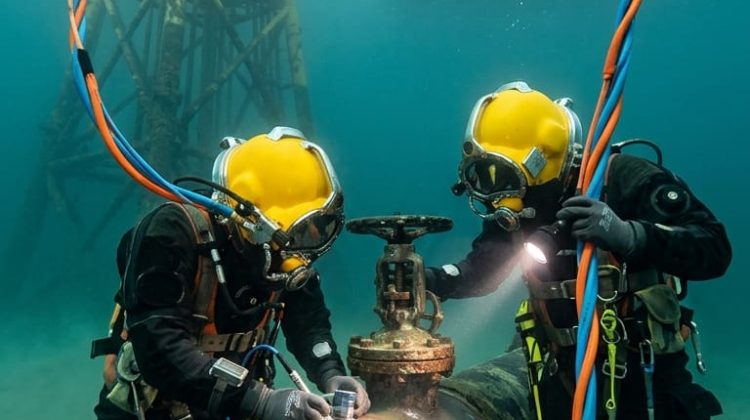
Offshore Oil & Gas Pipeline Services: Advanced Solutions for Long-Term Marine Asset Protection
The oil and gas industry is the backbone of the world economy, and offshore pipelines convey the precious hydrocarbons with no risk to the offshore production plants, submarine and onshore terminals. These pipelines are subjected to ongoing exposure to salt water, hydrostatic pressure, ocean current, corrosion, and mechanical stress, operating in extreme marine environments. Their long-term reliability would need to be guaranteed with the help of the full-fledged Offshore Oil & Gas Pipeline Services, which would integrate the engineering competencies, modern inspection tools, corrosion prevention, upkeep, and integrity control.
With the growth of offshore developments into deeper waters and more challenging operating environments, the operators of pipelines are turning to integrated service solutions to enhance their safety, decrease their downtimes, increase the life of their infrastructure, and maximize their operational efficiency. The proactive strategy can not only ensure protection of valuable assets but also facilitate regulatory compliance and environmental sustainability.
Why Offshore Pipeline Services Are Essential
Offshore pipelines are important long-term investments. These assets may undergo degradation resulting in expensive repair work, loss of production, and environmental hazards unless they are well inspected, maintained, and corroded.
The typical problems confronting offshore pipelines are:
- External corrosion due to exposure to seawater.
- Internal corrosion due to fluids that were transported.
- Coating degradation
- Mechanical damage in installation or operation.
- Movement of the seabed and changing sediments.
- Cyclic loading-induced fatigue.
- Marine biofouling
Professional pipeline service programs mitigate these risks before they impact the performance of operations.
Offshore Pipeline Integrity Services for Reliable Operations
Modern Offshore Pipeline Integrity Services are concerned with ensuring structural health and operational integrity of subsea infrastructure throughout its life cycle.
A thorough integrity program usually comprises:
- Condition assessments
- Corrosion monitoring
- Engineering evaluations
- Risk-based inspections
- Fitness-for-service analysis
- Maintenance planning
Instead of responding to failures, the integrity management enables the operators to detect emerging problems at an early stage and apply specific corrective measures.
The Importance of Subsea Pipeline Inspection
One of the most efficient methods of maintaining offshore infrastructure and warning of early deterioration is Routine Subsea Pipeline Inspection.
Remotely Operated Vehicle (ROV) Inspections
High-definition cameras, sonar, and sophisticated sensors fitted on ROVs conduct comprehensive underwater surveys without affecting production activities.
These tests are used to detect:
- Coating damage
- Corrosion activity
- Structural defects
- Pipeline movement
- Seabed interactions
Intelligent Pigging
Smart pipeline inspection devices move through pipelines and find information about the wall thickness, corrosion, cracks, and deformation in details.
Non-Destructive Testing (NDT)
Techniques like ultrasonic testing and inspection of magnetic particles enable engineers to assess the condition of pipelines while maintaining structural integrity.
Routine inspections will give the correct data to make informed decisions on maintenance.
Offshore Pipeline Maintenance Best Practices
Effective Offshore Pipeline Maintenance integrates both preventive and predictive maintenance activities to maximize the performance of infrastructure and minimize operational risks.
Major maintenance practices are:
Protective Coating Repairs
Coating systems damaged are to be repaired immediately to avoid seawater contacting the steel surface.
Cathodic Protection Monitoring
Frequent monitoring of sacrificial anodes and the impressed current system is a guarantee of ongoing corrosion protection.
Cleaning and Marine Growth Removal
Elimination of marine life enhances inspection accuracy, and it assists in maintaining the effectiveness of the coating.
Scheduled Preventive Maintenance
Regular maintenance schemes minimize the chances of sudden failures and prolong the life span of pipes.
These activities in combination enhance the availability of assets and minimize the lifecycle costs.
Marine Pipeline Corrosion Protection Strategies
One of the most common causes of the failure of offshore pipelines is corrosion. Marine Pipe Corrosion Protection is achieved by using a combination of several complementary technologies.
Typical protection systems are:
- Fusion Bonded Epoxy (FBE) coating.
- Polyethylene (PE) 3LPE Coatings.
- Polyurethane protective coatings
- Abrasion-resistant overcoats
- Cathodic protection systems
These solutions provide long-term protection against seawater, oxygen, chemicals, and mechanical damage as well as long-term infrastructure performance.
Offshore Asset Integrity Management Through Digital Innovation
Modern Offshore Asset Integrity Management combines engineering skills with the use of modern digital technologies to enhance maintenance planning and efficiency.
Emerging technologies include:
Digital Twin Platforms
Virtual models are used to simulate the performance of a pipeline and assist engineers in making predictions about maintenance in the future.
Smart Monitoring Sensors
Pressure, temperature, corrosion activity, and structural loading are observed using real-time sensors to identify anomalies in their early stages.
Artificial Intelligence
AI-based analytics analyze inspection data, predict degradation patterns, and maximize maintenance planning.
Robotics and Automation
High-tech ROVs and autonomous underwater vehicles enhance the quality of the inspection and decrease the operational risks.
These inventions aid in proactive management of assets and enhance infrastructure reliability in the long term.
Emerging Trends in Offshore Oil & Gas Pipeline Services
The offshore sector has been embracing new technologies that enhance the performance and sustainability of its operations.
Key trends include:
- Risk-based integrity management
- Automated subsea inspections
- Predictive maintenance using AI
- Corrosion monitoring systems.
- Low-environmental-impact protective coatings
- Asset management platforms on the cloud.
These advancements assist operators in minimizing unavailability and optimizing infrastructure performance.
Frequently Asked Questions (FAQs)
Q1. What offshore oil & gas pipeline services are?
Ans: They encompass inspection, maintenance, corrosion protection, integrity management, repair, monitoring, and engineering solutions that make offshore pipelines safe and efficient.
Q2. What are the reasons why offshore pipeline integrity services are important?
Ans: They assist in the detection of problems with the structure at its initial stages, decrease the risk of failures, enhance the level of safety, and increase the life of an offshore pipeline.
Q3. What is the process of inspecting subsea pipelines?
Ans: The underwater pipelines are inspected by the operators using ROVs, intelligent pigging tools, sonar systems, and non-destructive testing methods.
Q4. What role does marine pipeline corrosion protection play?
Ans: Cathodic protection, protective coatings, and corrosion monitoring vessels inhibit wear and tear due to the salty seawater and other unfavorable offshore conditions.
Q5. What are the benefits of offshore asset integrity management in enhancing reliability?
Ans: It integrates inspections, engineering tests, predictive maintenance, and digital monitoring to maximize asset performance and minimise lifecycle costs.
Conclusion
A thorough approach that integrates inspection, maintenance, corrosion prevention, and sophisticated engineering solutions is the key to reliable offshore infrastructure. Investing in professional Offshore Oil and Gas Pipeline Services will enable the operators to make the pipelines more secure and increase their lifespan, reduce the cost of operations, and make the assets more reliable in the long term.
With the ongoing changes in offshore projects, the introduction of new technologies in the field of integrity management, predictive maintenance, and high-performance corrosion protection systems will also be crucial in safeguarding the valuable marine assets and enable long-term sustainability of energy operations.
Related coating services: offshore pipeline maintenance
