

Offshore Pipeline Integrity Services: Advanced Solutions for Long-Term Asset Reliability
Offshore pipelines are an important infrastructure that plays a role in the transport of oil, gas, and energy resources in large marine environments. These assets work in harsh conditions such as high pressure, exposure to corrosive seawater, varying temperatures, and mechanical forces. Their long-term performance cannot be guaranteed by merely performing routine maintenance, but instead, a holistic approach to monitor assets, corrosion management, inspection, and risk management has to be taken. Here is where the Offshore Pipeline Integrity Services come in.
With the trend of offshore operations shifting to deeper waters and more challenging operating conditions, operators of pipelines are embracing more sophisticated approaches to integrity to improve reliability, reduce operational risks, and increase the life of their assets. Successful integrity programs can assist in protecting investments as well as favoring secure and efficient offshore activities.
Why Pipeline Integrity Matters in Offshore Operations
The breakdown of pipelines may lead to the loss of a lot of money, environmental impact, and loss of operations. Even small flaws may be transformed into big problems unless these flaws are detected and dealt with early enough.
Some of the main problems that impact offshore pipelines are:
- External corrosion
- Internal corrosion
- Mechanical damage
- Coating degradation
- Fatigue cracking
- Seabed movement
- Third-party interference
An offensive integrity approach assists operators in identifying vulnerabilities before it affects production or asset performance.
Understanding Pipeline Integrity Management
Effective Pipeline Integrity Management is a carefully organized process that involves integration of inspection, monitoring, maintenance, and risk assessment operations to maintain the pipelines in a fit state of service during the entire period of their operation.
The main aims are:
- Preventing failures
- Extending asset lifespan
- Improving operational safety
- Supporting regulatory compliance
- Optimizing maintenance budgets
An effective integrity management system allows the operators to take informed decisions based on the condition of the assets and risk profile, and not rely on reactive maintenance only.
Core Components of Offshore Asset Integrity Solutions
The modern Offshore Asset Integrity Solutions combines various technologies and engineering practices in order to ensure the protection of the offshore infrastructure.
Corrosion Monitoring and Prevention
One of the major causes of pipeline degradation is corrosion. Constant observation aids in detecting at-risk areas and allows responding in time.
The typical corrosion control techniques are:
- Protective coating systems
- Cathodic protection
- Corrosion inhibitors
- Material selection optimization
- Monitoring and inspection programmes.
These are the steps of the efficient Offshore Corrosion Protection.
Structural Integrity Assessments
Periodic engineering inspections are used to detect the presence of fatigue, deformation, or mechanical damage in the pipeline that could influence the operations.
Assessments typically include:
- Stress analysis
- Fitness-for-service evaluations
- Defect assessments
- Remaining life calculations
This information enables operators to prioritize carrying out maintenance as well as minimizing operational risks.
The Importance of Subsea Pipeline Inspection Services
To ensure the reliability of offshore infrastructure, routine inspections are imperative. Advanced Subsea Pipeline Inspection Services assist operators in assessing the state of the pipelines without interfering with production.
The latest technologies of inspection are:
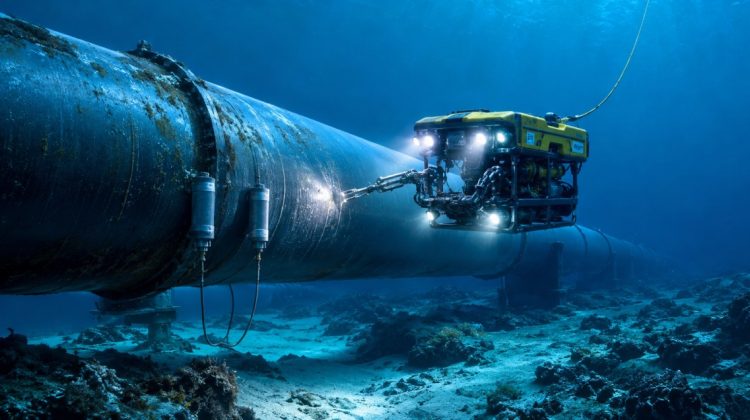
Remotely Operated Vehicles (ROVs)
The underwater inspection can be carried out in a comprehensive manner by using ROVs with high-definition cameras and sensors that reveal the damage to the coating, corrosion, and structural flaws.
Non-Destructive Testing (NDT)
The NDT techniques enable engineers to examine the condition of pipes without harming the asset itself.
Some NDT methods are:
- Ultrasonic testing
- Magnetic particle inspection
- Eddy current testing
- Visual inspection systems
Intelligent Pigging
Intelligent pigs or pipeline inspection tools are equipment that moves through pipelines to get specific data regarding the wall thickness, corrosion, and structural aberrations.
The technologies offer useful information to integrity management programs and long term maintenance planning.
Offshore Corrosion Protection: A Critical Reliability Strategy
In offshore environments, corrosion is an inevitable issue because of the continuous exposure to seawater, oxygen, and severe operating conditions. Effective Offshore Corrosion Protection involves integrating several levels of defense to minimize the risk of degradation.
Advanced Protective Coatings
The coating systems of modern technologies provide a protective layer that does not allow elements that cause corrosion to reach the steel surface.
Common solutions include:
- Fusion Bonded Epoxy (FBE)
- Three-Layer Polyethylene (3LPE)
- Polyurethane Coatings
- Abrasion-resistant coatings
Cathodic Protection Systems
Impressed current and sacrificial anodes are useful in controlling the process of electrochemical corrosion as well as prolonging the life of pipeline services.
Combined, these technologies have a great effect on the long-term performance and reliability of assets.
Pipeline Maintenance and Reliability in Modern Offshore Projects
Successful Pipeline Maintenance and Reliability programs are based on proactive maintenance of the assets instead of reactive maintenance. Predictive maintenance plans involve real-time data and analytics to detect any potential problems in advance to prevent failures.
Benefits include:
- Reduced downtime
- Lower repair costs
- Improved operational efficiency
- Enhanced safety performance
- Extended infrastructure lifespan
With the help of current monitoring technologies, operators will be able to optimize the maintenance timetable and enhance the overall use of assets.
Emerging Trends in Offshore Integrity Services
The offshore industry is fast adopting digital transformation in order to enhance the reliability and performance of assets.
Digital Twin Technology
Virtual asset models enable operators to model operating conditions and forecast failures, and assess maintenance scenarios.
Artificial Intelligence and Predictive Analytics
The AI-driven systems will analyze inspection and operational data to predict degradation patterns and to prioritize maintenance tasks.
Continuous Condition Monitoring
Smart sensors are used to give real-time insights into corrosion rates, pressure variations, structural loads, and the environment.
These innovations are transforming the future of offshore asset management and integrity assurance.
Best Practices for Long-Term Offshore Asset Reliability
Offshore operators need to take a holistic approach to integrity, incorporating:
- Routine inspections
- Corrosion prevention programs
- Risk-based maintenance planning
- Advanced monitoring technologies
- Regulatory compliance reviews
- Data-driven asset management
A combined strategy can be used to minimize operational risks and enhance the value of assets over the long run.
Frequently Asked Questions (FAQs)
Q1. What are the offshore pipeline integrity services?
Ans: They are specialized services that assist in monitoring, inspection, maintenance, and protecting offshore pipelines to maintain safe and reliable operations in their lifecycle.
Q2. Why is pipeline integrity management important?
Ans: It assists in avoiding failures, increasing the life cycle, and minimizing the maintenance costs by proactively monitoring and managing the risks.
Q3. Which technologies are applicable in pipeline inspections underwater?
Ans: Common technologies are the ROV inspections, intelligent pigging, ultrasonic testing, visual inspections, and other non-destructive testing techniques.
Q4. So what are the benefits of offshore corrosion protection in enhancing reliability?
Ans: Cathodic protection systems, corrosion monitoring programs, and protective coating systems assist in decreasing the degradation of materials and increasing their life span.
Q5. What is the advantage of predictive maintenance in an offshore pipeline?
Ans: Predictive maintenance assists in detecting problems at an early stage, which minimizes downtime, cuts down repair expenses, and enhances efficiency in operations.
Conclusion
The need to ensure long-term reliability of offshore infrastructure is growing, and a proactive and technology-oriented approach will be necessary. Offshore Pipeline Integrity Services are used to assist operators to safeguard vital assets and maintaining sustainable operations through sophisticated inspections, corrosion prevention programs, risk-based maintenance planning, and ongoing monitoring.
Today, offshore companies can save the lifecycle costs, enhance safety performance, and increase the value of infrastructure by investing in holistic integrity management strategies to benefit the decades to come.
