


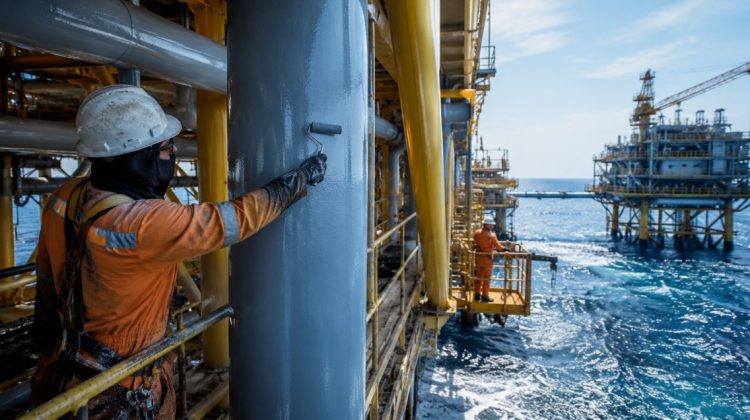
Offshore Anti-Corrosion Coating: Advanced Solutions for Long-Term Offshore Asset Protection
Offshore infrastructures are working in one of the harshest environments in the world. Repetitive contact with saltwater, humidity, ultraviolet radiation, temperature changes, and chemical pollutants may hasten corrosion and greatly decrease the lifetime of assets. Whether it is offshore platforms and subsea pipelines, marine vessels, and marine production facilities, the vulnerability of critical infrastructures to corrosion is crucial in the provision of reliability in operation and profitability in the long term. It is here that the Offshore Anti-Corrosion Coating solutions are very critical.
The latest coating systems are designed to form tough shields that protect the surface of steel against environmental degradation to enable the operator to save on the cost of maintenance, enhance safety, and increase the life of the precious offshore equipment. With the ever-growing offshore energy projects into deeper waters and more stringent environments, sophisticated corrosion protection systems have become a pillar of successful asset management practices.
Why Corrosion Is a Major Challenge in Offshore Environments
Corrosion is a natural electrochemical reaction that takes place when metal interacts with the surrounding environment. The presence of saltwater, moisture, oxygen, and chlorides in the atmosphere in an offshore environment accelerates this process.
Typical causes of offshore corrosion are:
- Continuous seawater exposure
- High humidity levels
- Chloride and salt spray pollution.
- Wear and abrasion, mechanical.
- Chemical exposure
- Temperature variations
In the absence of adequate protection, the structural integrity may be undermined by corrosion, and maintenance costs may rise and pose serious safety and environmental hazards.
The Importance of Marine Corrosion Protection
To ensure the performance and reliability of offshore assets throughout their life cycle of operation, it is important to have Effective Marine Corrosion Protection. Corrosion prevention plans aid in minimizing degradation and also facilitating the sustainability of infrastructure in the long-term.
Key benefits include:
- Extended asset lifespan
- Lower maintenance costs
- Improved structural reliability
- Enhanced operational safety
- Reduced downtime
- Better environmental compliance
Through a full-scale protection system, operators are able to substantially enhance the payback of offshore infrastructure projects.
Understanding Offshore Protective Coating Systems
Today, Offshore Protective Coating Systems are made to endure extreme marine environments and offer extended defense against corrosion and mechanical damages.
These systems are usually made up of several layers that interact to provide a strong protective barrier.
Surface Preparation
Development of surface performance is dependent on proper surface preparation. Abrasive blasting eliminates contaminants and provides an ideal profile for adhesion of the coating.
Primer Coatings
Primers offer the initial protection by adhering to the surface of the steel and inhibiting the entry of moisture.
Intermediate Coatings
These layers increase the resistance to corrosion and increase the overall durability of the coating.
Topcoat Protection
Topcoats offer protection against UV radiation, chemical exposure, and weathering effects of the environment, and enhance life cycle performance.
This multi-layer solution provides all-round protection of offshore assets in harsh environments.
Industrial Anti-Corrosion Coatings Used in Offshore Applications
A number of categories of Industrial Anti-Corrosion Coatings are widely applied in the offshore industry, based on environmental and asset needs.
Fusion Bonded Epoxy (FBE)
FBE coatings have high adhesion and corrosion resistance, and are commonly applied to offshore pipelines and subsea infrastructure.
Epoxy Coating Systems
Epoxy coatings are also highly chemically resistant and long-lasting; hence, they can be used on offshore platforms, storage tanks, and structural steel.
Polyurethane Coatings
Polyurethane systems have excellent weathering, stretch, and resistance to long-term exposure to the sea.
Zinc-Rich Protective Coatings
Such coatings offer sacrificial corrosion protection that is a barrier and cathodic protection to steel surfaces.
The technologies are chosen depending on the needs of the project, the conditions of the environment, and the anticipated life of the service.
Subsea Corrosion Prevention for Offshore Infrastructure
The corrosion risk is greatly elevated in the underwater environment where structures are in constant contact with seawater and hydrostatic pressure. The best approach to Subsea Corrosion Prevention involves coating and cathodic protection, as well as periodic inspection.
Typical underwater defense systems comprise:
- High-performance coating systems
- Cathodic protection anodes
- Corrosion monitoring technologies
- Remote inspection programs
- Risk-based maintenance planning
All these solutions aid in ensuring structural integrity and minimizing the chances of expensive underwater repairs.
Offshore Asset Integrity Management and Corrosion Control
Coating application is not enough to achieve successful corrosion prevention. Effective Offshore Asset Integrity Management is a combination of inspection, monitoring, maintenance, and risk assessment practices to maintain long-term reliability of assets.
An extensive integrity program would generally consist of:
- Corrosion risk evaluations
- Coating condition assessments
- Non-destructive testing (NDT)
- Structural inspections
- Maintenance scheduling
- Compliance monitoring
Through innovative coating technologies and proactive integrity control, the operators are able to maximize the use of assets and reduce operational risks.
Emerging Trends in Offshore Corrosion Protection
The offshore industry is also constantly embracing new technologies to enhance corrosion control and asset management.
Smart Coating Technologies
State-of-the-art self-monitoring coatings can be used to track the coatings and, therefore, identify when they are getting damaged before major damage is caused.
Digital Asset Monitoring
Real-time monitoring ensures that there is constant information on the environmental factors and corrosion.
Predictive Maintenance Analytics
The technologies of artificial intelligence and machine learning can be used to predict corrosion and streamline the process of maintenance planning.
Environmentally Sustainable Coatings
There is new low-VOC and environmentally friendly formulations that are in support of sustainability goals and do not compromise high-performance protection standards.
The future of offshore corrosion management is undergoing these innovations.
Best Practices for Long-Term Offshore Asset Protection
In order to offer the highest level of protection and reliability, offshore operators should:
- Choose a suitable coating depending on the environment.
- Make sure that the surface is prepared.
- Install cathodic protection systems.
- Conduct regular inspections
- Monitor coating performance
- Implement preventive maintenance measures.
An integrated protection system can minimize the lifecycle costs and increase the service life of infrastructure.
Frequently Asked Questions (FAQs)
Q1. What is offshore anti-corrosion coating?
Ans: It is an expert protective coating system, which is created to protect against corrosion and environmental degradation of marine infrastructure that is offshore and subjected to the severe marine environment.
Q2. Why is marine corrosion protection important?
Ans: Marine corrosion protection contributes to the life of assets, safety, lowered maintenance costs, and integrity of the structure in offshore conditions.
Q3. Which are the most common industrial anti-corrosion coating used offshore?
Ans: Fusion-bonded epoxy (FBE), epoxy coating, polyurethane coating, and zinc-enriched protective systems are common choices.
Q4. How does subsea corrosion prevention work?
Ans: It integrates protective layers, cathodic protection systems, monitoring technologies, and maintenance programs to deter underwater corrosion.
Q5. What is the place of offshore asset integrity management in controlling corrosion?
Ans: Integrity management assists in all asset condition monitoring, risk assessment, maintenance planning, and long-term operation reliability.
Conclusion
Corrosion prevention is becoming a major concern to operators globally as offshore infrastructure continues to be more valuable and complicated. Offshore Anti-Corrosion Coating solutions offer the protection required to ensure long-term asset integrity and operational performance through advanced coating technologies, extensive monitoring, and proactive maintenance approaches.
Offshore organizations can minimize the lifecycle costs, enhance safety performance, and ensure that their infrastructure is fully valued over decades by investing in new corrosion control programs and good integrity management practices.
