


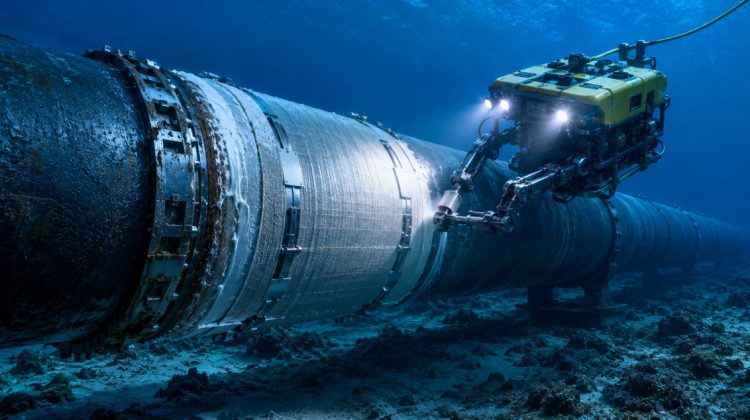
Subsea Pipeline Rehabilitation: Advanced Solutions for Extending Offshore Asset Lifespan
The offshore pipelines comprise one of the most important assets in the world energy sphere, since the oil, gas, and other resources are conveyed within large underwater systems. Nevertheless, the constant contact with seawater, corrosive elements, mechanical forces, and the aging infrastructure may decrease the performance and reliability of the pipes over time. With the maturation of offshore fields and the desire by the operators to increase the value of their assets, Subsea Pipeline Rehabilitation has become a strategic option that brings an increase in the life time of the field without incurring expensive replacements.
Instead of changing complete pipeline systems, rehabilitation programs are aimed at restoring the structural integrity, enhancing the corrosion resistance, and improving the overall performance. Modern inspection technologies, enhanced engineering methods, and new repair approaches can enable the operators to greatly increase the service life of the offshore infrastructure without compromising on safety and regulatory standards.
Why Offshore Pipelines Require Rehabilitation
Submarine pipelines are made to work under some of the worst conditions on earth. As time goes by, environmental exposure and operational needs may lead to degradation of the assets.
Some of the common problems associated with offshore pipelines include:
- External corrosion
- Internal corrosion
- Coating deterioration
- Mechanical damage
- Fatigue cracking
- Seabed movement
- Material aging
When not addressed, such problems may lead to higher maintenance expenses, decreased manufacturing performance, and higher operational risks. Rehabilitation programs can be used to overcome a pipeline’s performance until it fails in a serious way.
Understanding Pipeline Integrity Rehabilitation
Good Pipeline Integrity Rehabilitation can be described as a mix of testing, repairing, protecting, and monitoring functions designed to restore the status of the aging infrastructure.
The main purposes are:
- Extending pipeline lifespan
- Improving structural reliability
- Reducing operational risks
- Enhancing environmental protection
- Supporting regulatory compliance
- Optimizing use of current assets.
A holistic rehabilitation plan will enable operators to maximize on infrastructure performance, without incurring the huge expenses of pipeline replacement initiatives.
Advanced Inspection Technologies for Asset Assessment
Operators need to properly appraise the state of pipelines before commencing rehabilitation work. The modern inspection technologies can give specific information about the health of assets, as well as about the regions that need to be addressed.
Remotely Operated Vehicle (ROV) Surveys
High-definition cameras and advanced sensors on ROVs allow in-depth inspections of the under-water environment without disruption of operations.
These tests are useful in detecting:
- Coating damage
- Corrosion activity
- Structural defects
- Mechanical impacts
- Seabed interactions
Non-Destructive Testing (NDT)
NDT techniques enable engineers to examine the integrity of the pipeline without harming the actual pipeline.
Common techniques include:
- Ultrasonic testing
- Magnetic particle inspection
- Eddy current testing
- Visual inspection systems
These technologies present the vital information to create the rehabilitation plans, which are specific.
Subsea Pipeline Repair Solutions for Long-Term Reliability
Modern Subsea Pipeline Repair Solutions are tailored to provide solutions to different types of degradation with the least time and operational disturbance.
Composite Repair Systems
Composite wraps offer structural support and a corrosion-resistant nature without the need to conduct long duration underwater welding operations.
Benefits include:
- Rapid installation
- Reduced intervention costs
- Long-term durability
- Minimal production disruption
Mechanical Repair Clamps
In damaged pipeline, mechanical clamp systems are normally employed to regain structural integrity in the broken parts.
These solutions provide:
- Immediate leak containment
- Pressure retention capability
- Prolonged service life.
Welded Repair Techniques
To address more serious damage, it could be necessary to develop engineered welded repairs to regain the entire working performance and structural integrity.
Offshore Corrosion Mitigation Strategies
Corrosion is still among the major causes of deterioration of offshore pipelines. The best offshore corrosion mitigation programs are those that integrate several approaches to mitigate the risks of degradation.
Advanced Protective Coatings
The contemporary coating technology provides robust protection between the surface of steel and hostile environments at sea.
Common technologies include:
- Fusion Bonded Epoxy (FBE)
- Polyurethane coatings
- Three-Layer Polyethylene (3LPE)
- Abrasion-resistant overcoats
Cathodic Protection Systems
Impressed current systems and sacrificial anodes can be used to manage electrochemical corrosion and improve the long-term protection of assets.
Corrosion Monitoring Programs
Constant monitoring helps the operators to detect when there is a risk of corrosion and take corrective action before it gets out of control.
Offshore Asset Life Extension Through Rehabilitation
Offshore Asset Life Extension is one of the main advantages of the rehabilitation programs. Instead of spending money on expensive replacements, operators will be able to renew the existing infrastructure and operate safely over several more years.
Advantages include:
- Lower capital expenditure
- Reduced environmental impact
- Improved asset utilization
- Enhanced operational reliability
- Extended production life
In the case of mature offshore fields, life extension programs can be of significant economic value and can assist in achieving sustainability goals.
Underwater Pipeline Maintenance: A Proactive Approach
The effective rehabilitation of the asset requires the use of Underwater Pipeline Maintenance during the lifecycle of the asset. Early maintenance is used to avoid the emergence of small problems into big failures.
Best practices include:
- Routine inspections
- Risk-based maintenance planning
- Corrosion monitoring
- Coating assessments
- Integrity reviews
- Data-driven maintenance scheduling
Incorporating rehabilitation actions with proactive maintenance forms a comprehensive asset management plan to optimize long-term performance.
Emerging Trends in Offshore Rehabilitation
The offshore sector is also relying more on new technologies in order to enhance rehabilitation results.
Digital Twin Technology
Virtual asset models enable operators to model degradation situations and optimize maintenance planning.
Predictive Analytics
Artificial intelligence can be used to detect possible failures in advance, which allows to implement proactive intervention plans.
Robotics and Automation
High-tech robots help to enhance the precision of the inspection and mitigate the risks that come with subsea intervention operations.
Such innovations are changing the way offshore operators are dealing with aging infrastructure and how they lengthen their asset life.
Frequently Asked Questions (FAQs)
Q1. What is the rehabilitation of a subsea pipeline?
Ans: The process of renewing, repairing, and re-enhancing offshore pipelines to enhance performance, integrity, and operating life without necessarily replacing the whole asset is known as offshore pipeline renewal, repair, and upgrade.
Q2. Why is pipeline rehabilitation important?
Ans: Rehabilitation aids to overcome corrosion, coating damages, and structural damages, as well as to increase the lifespan of the assets and minimise replacement costs.
Q3. What are typical underwater pipeline repair solutions?
Ans: There are composite repairs, mechanical clamps, welded repairs, coating restoration, and corrosion protection systems.
Q4. What is the effect of offshore corrosion mitigation on the pipeline life?
Ans: To eliminate metal corrosion, corrosion mitigation involves the use of coatings, cathodic protection, and monitoring programs to aid in the preservation of the structural integrity.
Q5. What is the advantage of offshore life extension programs?
Ans: Life extension programs are able to maximize the use of existing infrastructure, minimize capital expenditure, enhance sustainability, and increase the capacity to produce.
Conclusion
With aging offshore infrastructure and the growing operational demands, Subsea Pipeline Rehabilitation has evolved into an essential approach to asset performance/reliability. By applying novel inspections, specific repair measures, corrosion prevention, and proactive maintenance services, operators could greatly increase the lifespan of the pipeline, minimize operational risks, and costs.
Investing in rehabilitation and integrity-driven asset management not only keeps the important offshore facilities safe but also ensures sustainable, efficient, and cost-effective operations over the years.
