

Subsea Asset Protection: Advanced Strategies for Long-Term Offshore Infrastructure Integrity
Offshore energy infrastructure is one of the most prized and highly technical assets worldwide. Subsea pipelines and risers, offshore platforms, and underwater structures, among others, are in very aggressive marine environments where corrosion, mechanical damage, and environmental exposures can severely affect service life. With the ongoing increase in offshore developments into deeper water and harsher environments, effective Subsea Asset Protection has become an important element of operational reliability, safety, and profitability.
Protection strategies in the present day are transcendent of the traditional coatings and extend to encompass the new advanced materials, predictive maintenance strategies, integrity monitoring systems, as well as the lifecycle management practices to achieve long-term performance of offshore infrastructure.
Why Offshore Assets Face Unique Protection Challenges
The marine environments are subject to a set of factors that hasten degradation. Dissolved oxygen, saltwater, marine life, change in temperature, and constant mechanical stress provide the ideal environment for corrosion and material wear and tear.
Unless adequate protection measures are in place, operators can encounter:
- Premature asset failure
- Increased maintenance costs
- Production downtime
- Environmental risks
- Regulatory compliance issues
- Reduced operational efficiency
This is why good Offshore infrastructure integrity programs are significant in safeguarding investments as well as the continuity of offshore operations.
Advanced Coating Technologies for Corrosion Prevention
Coatings that protect against corrosion in underwater conditions continue to be among the best lines of defense against corrosion. The coating systems used today are designed to withstand the severe offshore environments and also increase the life of the assets.
Offshore Anti-Corrosion Coating Systems
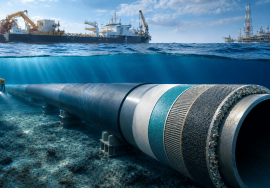
Contemporary Offshore Anti-Corrosion Coating applications build a strong layer of protection between the steel surfaces and corrosive marine elements. These systems are made to be resistant to moisture penetration, chemical exposure, and mechanical damages.
Common technologies include:
- Fusion Bonded Epoxy (FBE)
- Three-Layer Polyethylene (3LPE)
- Three-Layer Polypropylene (3LPP)
- Polyurethane Coatings
- Abrasion-Resistant Overcoats
These sophisticated coating systems enhance durability and low maintenance in the long-term.
Underwater Pipeline Corrosion Protection
Pipelines are also one of the most easily damaged subsea structures because they are always exposed to seawater and the pressure of working. Effective Underwater Pipeline Corrosion Protection is an integration of both external coating and cathodic protection measures to reduce the likelihood of corrosion and maintain structural integrity.
These solutions can also offer decades of service to pipelines when designed and maintained appropriately.
The Growing Importance of Subsea Corrosion Protection
Corrosion is one of the major causes of degradation of offshore assets globally. Even small failures of coating may enable the corrosion to propagate under the layer of protection, resulting in a lot of damage before it is detected.
Strict Subsea corrosion prevention procedures usually include:
- Protective coating systems
- Cathodic protection technologies
- Corrosion monitoring programs
- Regular subsea inspections
- Risk-based maintenance planning
Offshore operators will be able to reduce unexpected failure and increase the reliability of assets through the use of multiple levels of defense.
Digital Technologies Transforming Asset Integrity Management
The offshore industry is shifting towards digitalization to improve the efficiency of the maintenance process and performance of the assets.
Real-Time Structural Monitoring
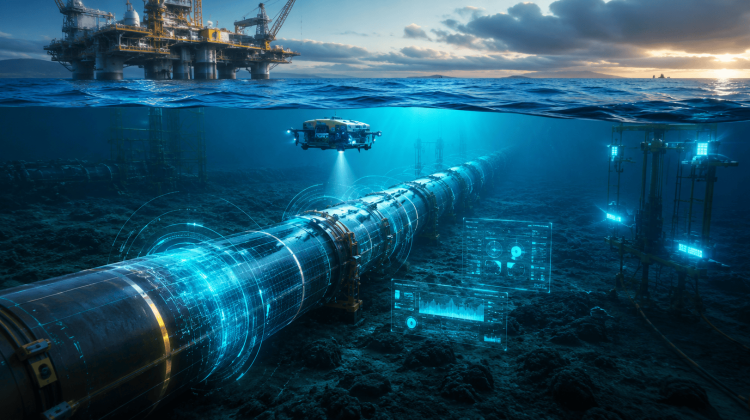
The sensors are state-of-the-art and continuously monitor the rate of corrosion, structural loads, pressure variations, and environmental factors. This information will assist operators to detect potential problems at an early stage, even before they turn out to be expensive failures.
Predictive Maintenance Systems
Information analytics and artificial intelligence are transforming the maintenance planning process, degradation patterns, and predicting repairs to optimally schedule repairs. The technologies help in proactive decision making and also improve on the overall performance of assets.
Remote Inspection Technologies
These systems are Remote Operated Vehicles (ROVs) and autonomous underwater systems that enable safer and more accurate inspection of underwater assets and lower-cost intervention campaigns.
Offshore Pipeline Preservation for Long-Term Reliability
Effective Offshore Pipeline Preservation begins during the project design stage and is executed during the entire lifecycle of the operation. The preservation strategies are focused on the integrity of the pipeline by addressing the risks of corrosion, mechanical wear, and exposure to the environment.
Best practices include:
- High-performance coating selection
- Cathodic protection optimization
- Routine inspection programs
- Flow assurance management
- Honesty test and reporting.
The active preservation policy will help minimize the losses in operations and generate the best gains on the infrastructure investments.
Marine Asset Protection Systems and Lifecycle Management
Contemporary Marine asset protection systems are a combination of multiple technologies to create an integrated defense against degradation. Operators are not using the coatings themselves anymore, but are adopting holistic protection frameworks.
These structures are likely to include:
- Corrosion control systems
- Structural monitoring technologies
- Risk assessment programs, Inspection and testing programmes.
- Web-based asset management.
These and good Offshore asset lifecycle management suggest that operators can achieve the best of the performance between installation and decommissioning.
Subsea Pipeline Integrity Management: A Strategic Approach
Corrosion prevention is not the only measure needed to protect offshore pipelines. Proper Subsea pipeline integrity management is a systematic approach to assessing the status, performance, and risks of the critical infrastructure.
Key elements include:
- Integrity risk assessments
- Corrosion monitoring
- Non-destructive testing (NDT)
- Inspection data analysis
- Maintenance planning and repair.
- Regulatory compliance verification
An effective integrity management program can be used to increase asset life and decrease operational and environmental risks.
Frequently Asked Questions (FAQs)
Q1. What does subsea asset protection mean?
Ans: Subsea asset protection is the technologies, coatings, monitoring, and maintenance procedures applied to protect offshore infrastructure against corrosion, mechanical damage, and environmental degradation.
Q2. What is the problem with corrosion in offshore infrastructure?
Ans: Offshore assets are subjected to very corrosive marine conditions where the seawater, oxygen, and exposure to chemicals can easily corrode metal structures unless they are well maintained.
Q3. What are the best means of corrosion protection for underwater pipelines?
Ans: The best practices are complex protective coatings, cathodic protection, regular inspections, and integrity monitoring programs.
Q4. What does offshore asset lifecycle management do to enhance the performance of infrastructure?
Ans: Lifecycle management assists operators to maximize maintenance, minimize downtime, maximize service life, and minimize overall operating cost by proactive planning and monitoring.
Q5. How do digital technologies contribute to offshore integrity management?
Ans: Digital technologies can be used to achieve real-time monitoring, predictive maintenance, remote inspections, and data-driven decision-making, enhancing safety and operational efficiency.
Conclusion
As offshore infrastructure is becoming increasingly complicated and capital intensive, advanced protection mechanisms are required in the quest to achieve long-term reliability and performance. The current-day technologies of Subsea Asset Protection, via new coating technologies, corrosion prevention solutions, predictive analytics, and integrity monitoring, allow the operators of high-risk assets to safeguard and reduce the operational risks and costs of the life cycle.
When companies invest in a comprehensive protection infrastructure, active maintenance programs, and advanced integrity management systems, they are better equipped to enjoy long-term offshore operations and can reap the benefits of their marine infrastructure over decades to come.